
African Culture
Kom Nyaluo: The Timeless Elegance of the Traditional Luo Stool
The Luo Stool, a traditional stool originating from the Luo community of Kenya, is far more than a utilitarian seat. It embodies heritage, craftsmanship, and evolving cultural identity. Characterized by its three-legged structure, concave surface, and elegantly curved supports, the stool originally stood at approximately 30cm, perfectly suited to the stature and lifestyle of rural dwellers.
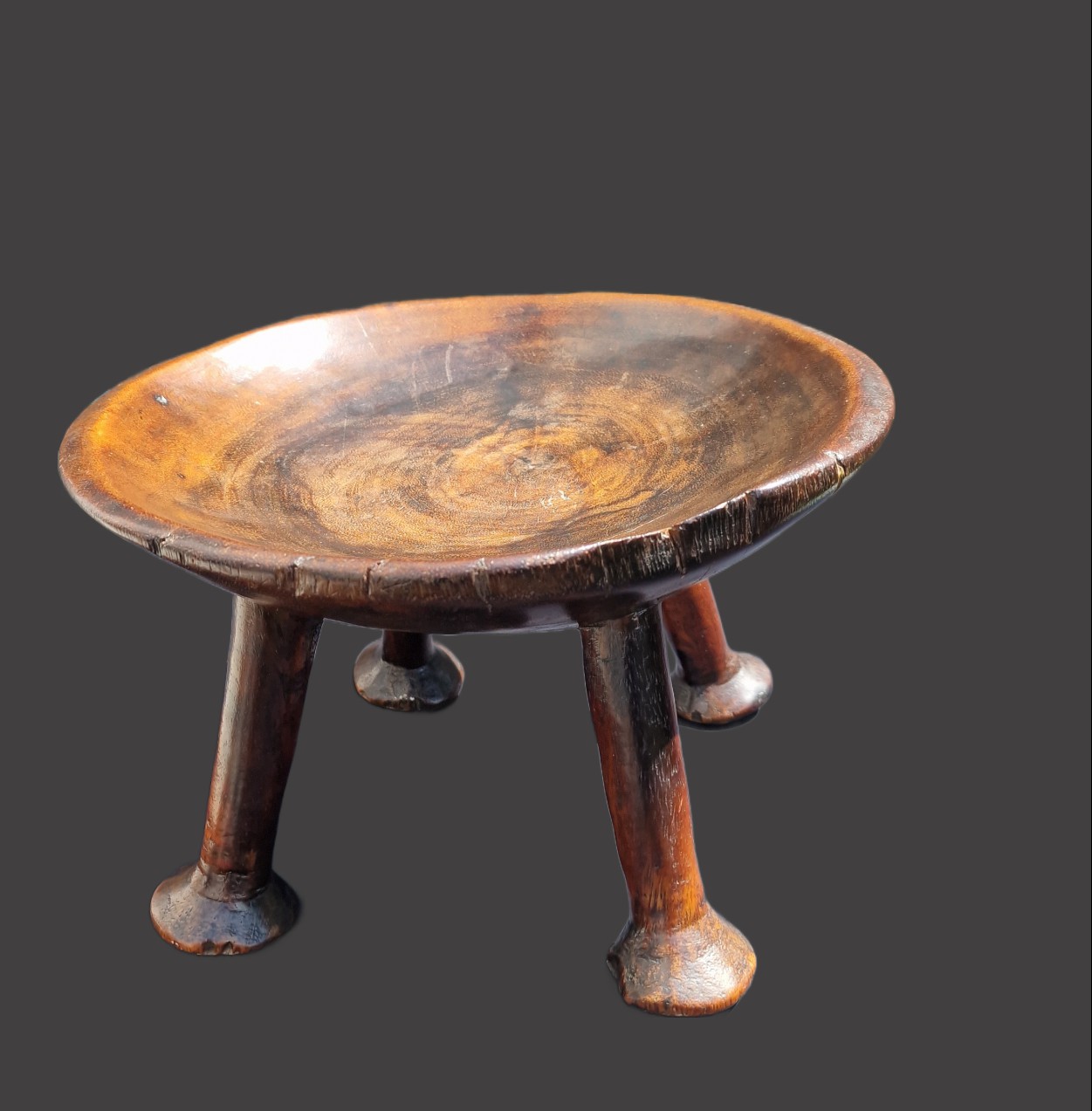
Kom Nyaluo: The Timeless Elegance of the Traditional Luo Stool
An authentic three-legged Kom Nyaluo carved from sacred hardwood.
The Luo Stool, a traditional stool originating from the Luo community of Kenya, is far more than a utilitarian seat. It embodies heritage, craftsmanship, and evolving cultural identity. Characterized by its three-legged structure, concave surface, and elegantly curved supports, the stool originally stood at approximately 30cm, perfectly suited to the stature and lifestyle of rural dwellers.
Across civilizations, stools have served as simple, backless seats for individual use. Within Luo society, however, the kom nyaluo held a prominent role in daily life. Lightweight and portable, it was ideal for outdoor gatherings, used while sorting beans, sharing stories, or conversing with neighbors. Its design reflected both practicality and aesthetic refinement, making it a staple of village life.

A traditional plain three-legged Luo stool.
Seating Traditions in the Luo Homestead
Traditional Luo seating practices extended beyond comfort to express social hierarchy, cultural values, and architectural adaptation. Most homes featured an elevated veranda built against the exterior wall, offering a communal space for rest after labor. These verandas, still common in rural Kenya, served as informal venues for storytelling, food preparation, and leisure.
A typical Luo homestead comprised multiple dwellings: the main house for the first wife, additional houses for other wives, and the boy’s hut (Simba). Seating options included mats (par), logs, compact stools (orindi), and later, foldable chairs. Life was largely lived outdoors, with indoor spaces reserved for sleeping and hosting guests.
The Kom Nyaluo as a Symbol of Status and Responsibility
The Luo Stool was not a general household item—it was a personal seat reserved for elders and adult men. It symbolized maturity, authority, and responsibility. Upon the death of a father, the firstborn son inherited the stool in a ceremonial handover, along with leadership artefacts such as the whisk and headdress. This ritual marked the transfer of familial and communal duties.

A three-legged Luo stool from the Kisumu Museum.
It is made from tree trunks and used for sitting mainly by men to symbolize authority and power as the head of the homestead.
While the ceremonial stool was passed to the firstborn, other adult men also received their own stools upon reaching maturity. These stools were carried to meetings, social events, and communal gatherings, reinforcing their role as personal items tied to status and identity.
Craftsmanship and Circular Design
The kom nyaluo was traditionally carved from a single piece of wood, without joints or weak points. Artisans selected trees like ober (mvule), ngo'wo (fig), and duwa (oak) for their strength, water resistance, and natural beauty. The stool’s circular form echoed the broader design ethos of Luo material culture-seen in houses, granaries, pots, and baskets-reflecting the cyclical nature of communal life.
Most stools were plain, polished with natural substances from special trees. However, stools made for leaders featured intricate carvings, symbolic patterns, and beadwork along the edges, denoting prestige and authority.

Artisan carving a traditional Kom Nyaluo stool from a tree trunk.
Evolution of the Stool and Changing Social Boundaries
As Luo communities migrated and interacted with neighboring cultures, stool designs evolved. The introduction of nails and glue led to the creation of four-legged stools, which became common household furniture. These decorated versions were no longer exclusive to elders and were appreciated for their aesthetic value in modern homes.
Despite these changes, the original Luo Stool retained strict social boundaries. It was a private item—women and children were not permitted to use it. This reinforced its association with maturity, dignity, and personal responsibility. The ceremonial passing of the stool marked not only inheritance but the continuation of tradition.
Privacy, Attire, and Cultural Context
In earlier times, Luo men wore simple loincloths made from animal hides. Clothing was minimal, which heightened the importance of privacy and personal space. Just as bedrooms (korka chiena) were protected, so too was the stool. It was a symbol of personal dignity and was not shared.
Modern interpretations sometimes frame the kom nyaluo as a symbol of male power, but such readings often overlook the nuanced cultural boundaries that governed its use. The stool represented broader ideals of respect, responsibility, and the safeguarding of private space.

Decorated Luo stools with beads and carvings symbolizing respect or leadership.
Enduring Significance and Contemporary Relevance
Today, the Luo Stool continues to inspire artisans, collectors, and cultural scholars. Its legacy lives on in rural homes, ceremonial practices, and modern interpretations of African design. As documented in Paulo Mboya’s 1934 work Luo Kitgi gi Timbegi, the stool remains a powerful emblem of Luo identity and generational continuity.
Whether preserved in traditional settings or reimagined for contemporary interiors, the kom nyaluo stands as a timeless symbol of heritage, artistry, and the enduring values of community and leadership. Browse Our Collection – Shop Authentic Luo Stools https://okellooregeart.com/
References:
- Onyango-Ku-Odongo, J. M., & Webster, J. B. (1976). The central Luo during the Aconya.
- East African Literature Bureau.
- Mboya. (1998). Luo KitgiGiTimbegi, A translation into English of the book Luo Kitgi gi Timbegi
- (J. Achieng, Trans.) ATAI(Originalworkpublished1934).