African Culture
Two Baskets, Two Traditions: Ethiopia and the Art of Sharing
Explore Ethiopian basketry and the British picnic hamper, and discover how craftsmanship, food and hospitality bring people together across two traditions.
 Okello Orege Art
A basket can be far more than a vessel.
Across cultures, baskets have carried food and provisions, but they have also helped create the occasions in which people gather, eat and connect.
The Ethiopian Agilgul basket and the British picnic hamper come from very different traditions, yet both demonstrate how a beautifully crafted basket can become part of a social experience centred around food.
One brings food into a gathering. The other carries food into a gathering somewhere beyond the home.
Different traditions, but a remarkably familiar purpose: bringing food and people together.
Ethiopian Basketry: Function, Beauty and Identity
Ethiopian basketry encompasses a remarkable variety of forms, materials, patterns and regional traditions.
Among these is the Agilgul, represented by OOA's 1970s basket. Handcrafted from woven grass and finished with a leather outer covering, the piece demonstrates how practical construction and decorative craftsmanship can exist together.
The woven structure gives the basket its form and durability, while the richly aged leather adds texture, character and a sense of history.
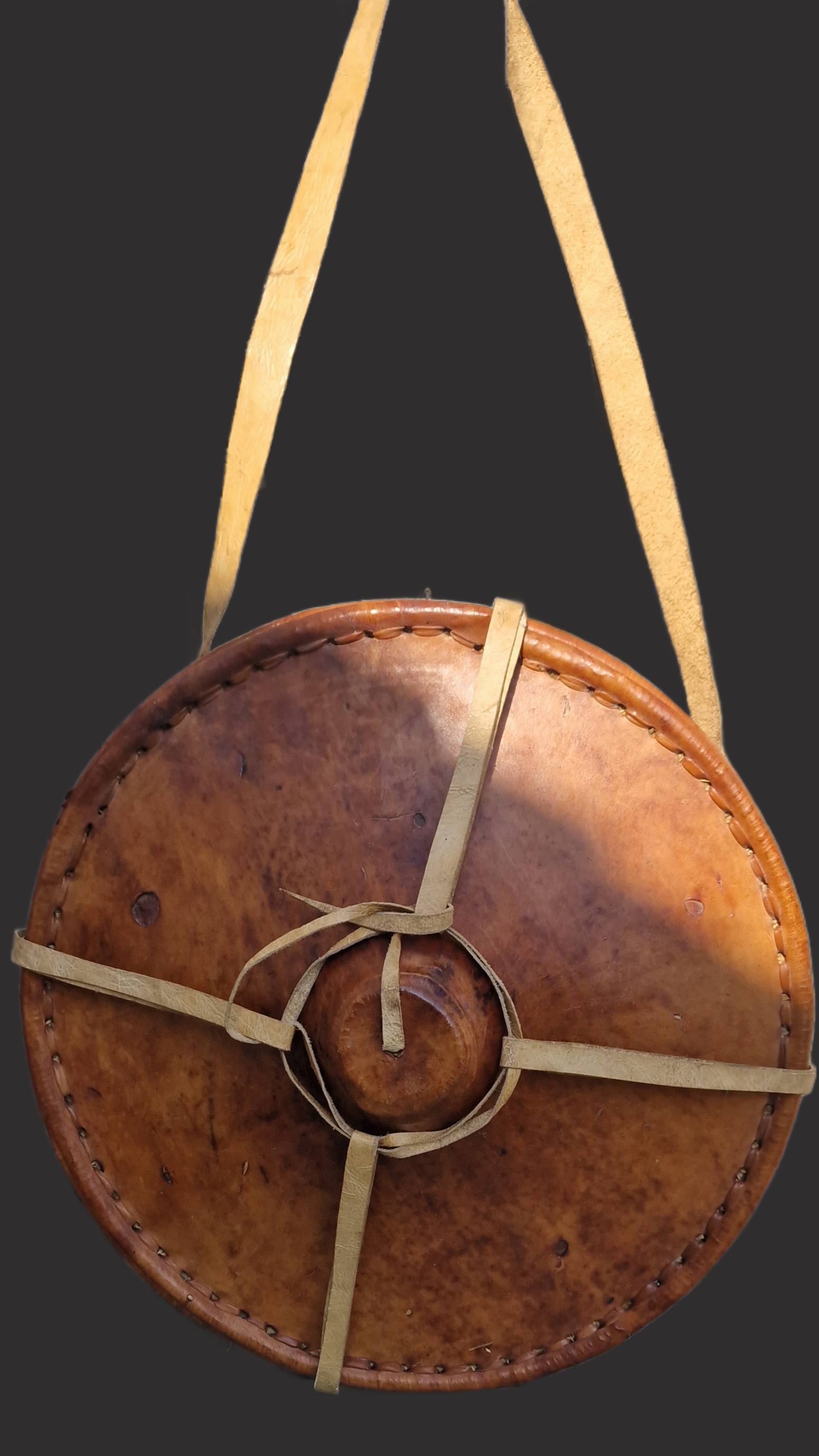
The 1970s OOA Agilgul picnic basket with leather outer covering.
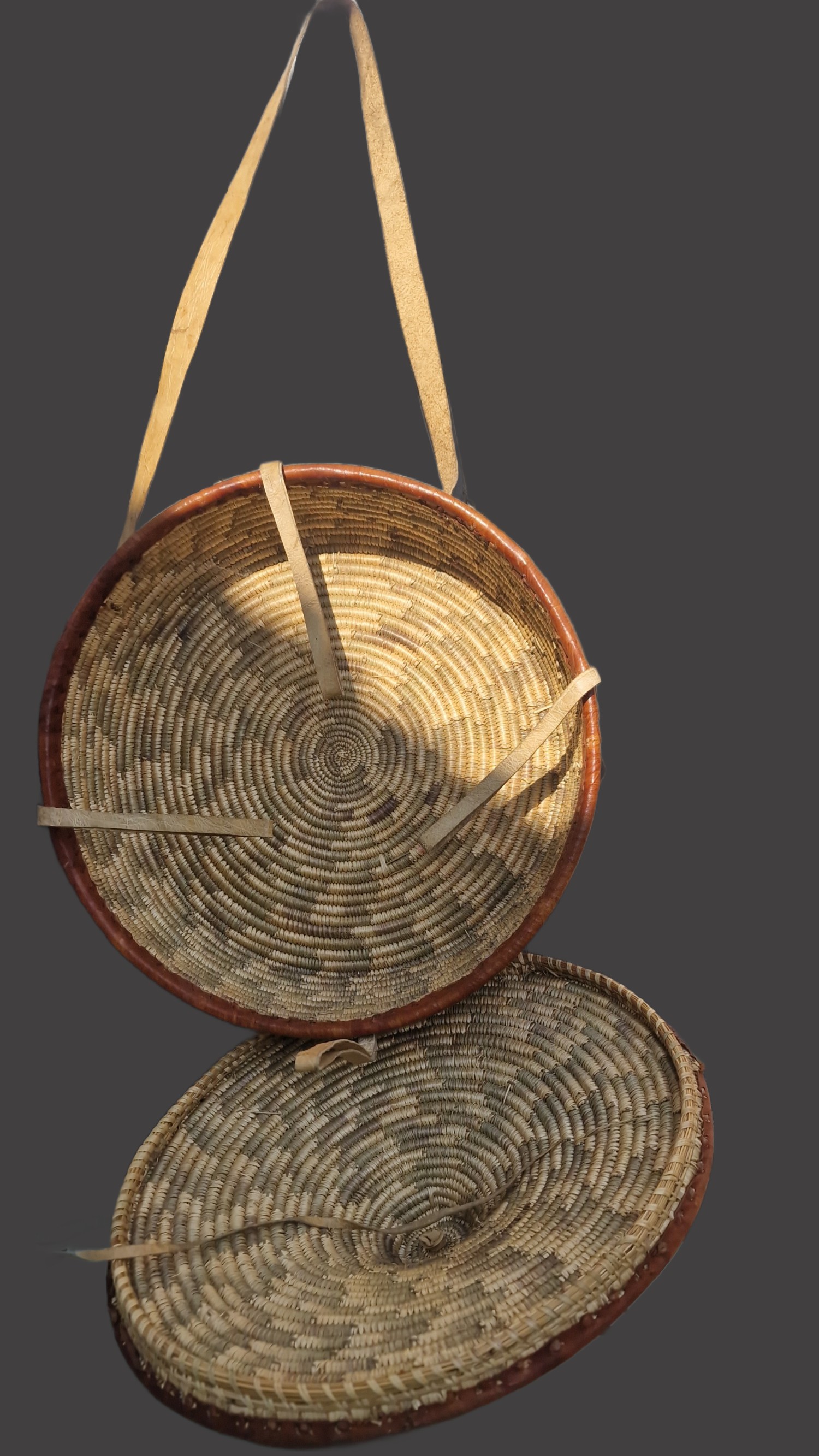
The same Agilgul, opened to reveal its woven form
But the Agilgul is part of a much broader Ethiopian basket-making tradition.
Across Ethiopia, baskets have served practical purposes while also becoming expressions of craftsmanship, identity and social life. Their forms, colours, materials and patterns reflect the skill of the people who make them.
This meeting of function and artistry is what makes Ethiopian basketry so compelling.
A basket can be made to carry something, but the way it is made can transform it into an object worth preserving.
The Mesob and the Culture of Sharing
Among Ethiopia's best-known basket forms is the mesob, a distinctive covered basket traditionally made from woven plant fibres.
Its characteristic form is often conical or domed, with intricate woven patterns and a fitted lid.
The mesob is closely associated with Ethiopian food culture, particularly the serving of injera and communal dining.
In traditional Ethiopian dining, food is placed at the centre of the gathering. Injera forms the foundation of the meal, with different stews and dishes arranged across it. Rather than creating separate individual plates for each person, diners gather around the same food.
The mesob therefore becomes part of the experience of sharing.
It can hold and protect food, but its significance extends beyond storage. It becomes part of the setting in which people gather, eat and connect.
This is an important part of understanding Ethiopian basketry.
The basket is not always separate from the social experience. It can help create it.
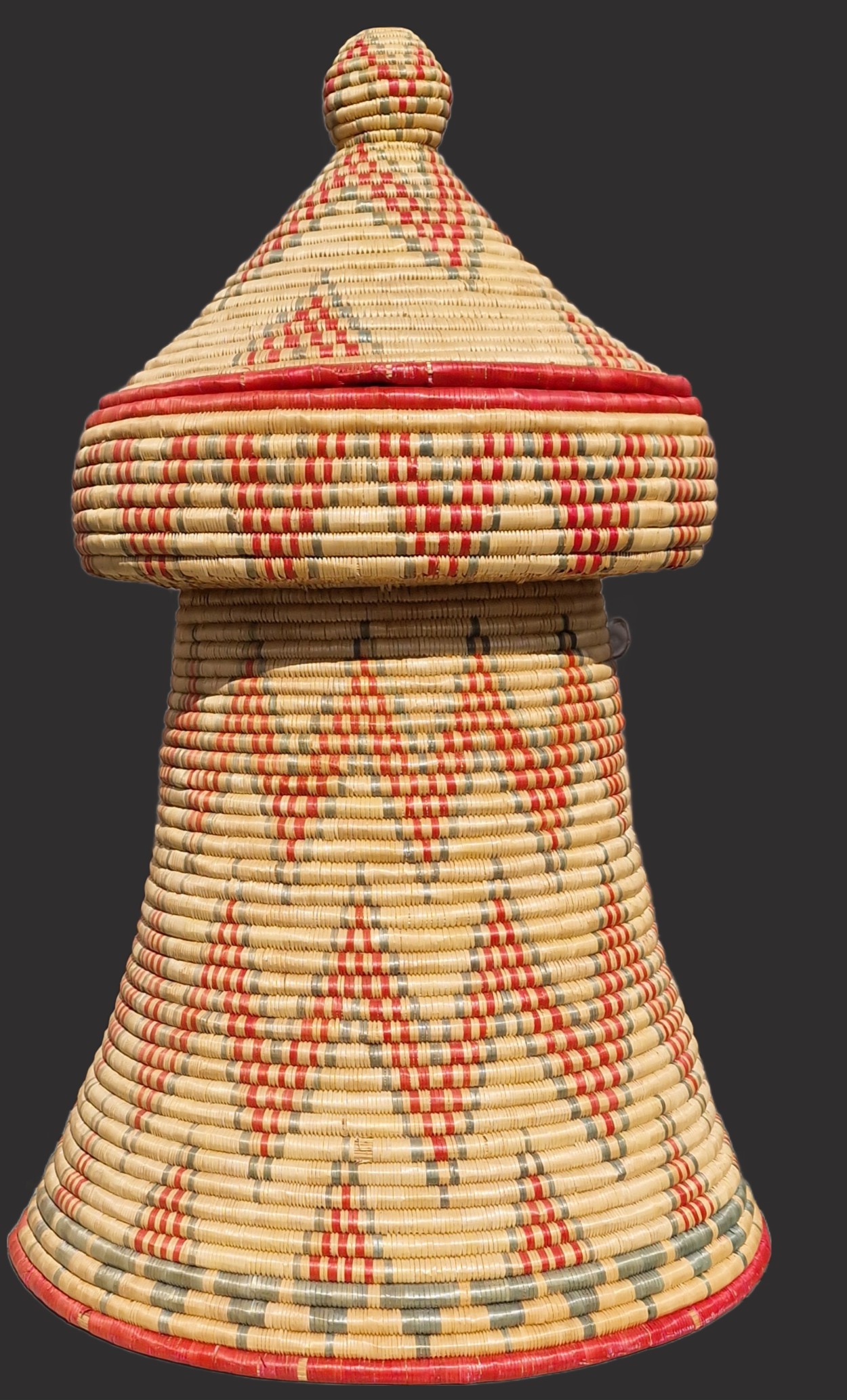
Ethiopian Messob Basket
Craftsmanship Written Into Every Strand
The visual appeal of Ethiopian basketry comes largely from its construction.
Traditional basketry involves carefully preparing and weaving natural plant fibres into structured forms. Different regions and communities have developed their own approaches to colour, pattern, shape and decoration.The resulting objects can be remarkably intricate.
Bands of colour may spiral around the body of a basket. Geometric patterns can distinguish one piece from another, while natural materials bring their own textures and variations.
The craftsmanship is therefore not simply decorative.
The structure itself is the result of skilled handwork.
Beauty, function and construction emerge together through the weaving process.
That relationship between usefulness and artistry is part of what makes traditional Ethiopian baskets so compelling as both functional objects and works of craft.
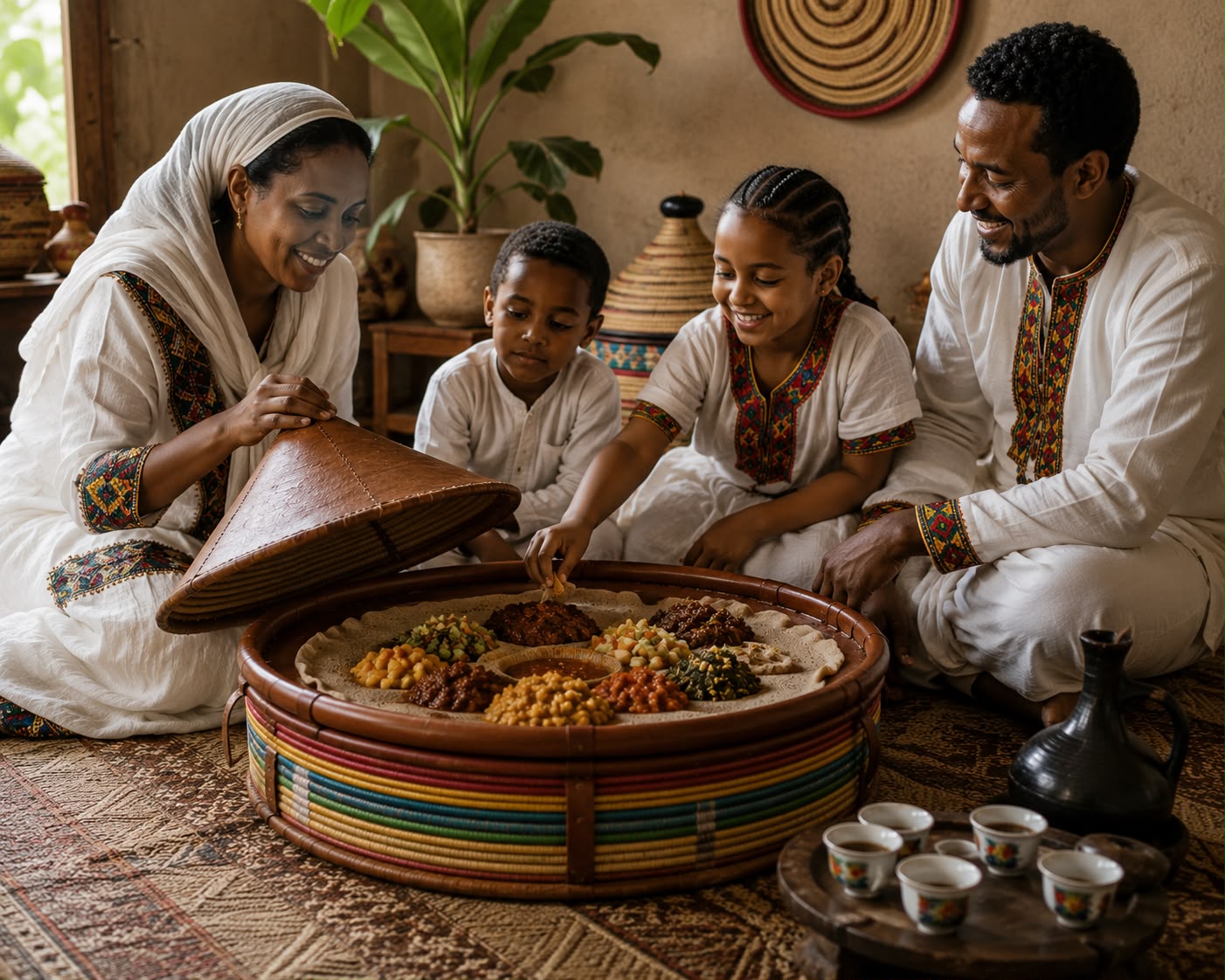
Agilgul/Ethiopian Basketry used as a food container ,bringing friend and family together!
From Everyday Craft to Museum Collection
The importance of Ethiopian basketry can also be seen in the way it has been presented alongside some of Ethiopia's most significant artistic traditions.
Ethiopia at the Crossroads, co-organised by the Walters Art Museum, Peabody Essex Museum and Toledo Museum of Art, brought together more than 220 objects spanning approximately 1,750 years of Ethiopian artistic, cultural and religious history. The exhibition explored Ethiopia's rich artistic traditions and its connections with the wider world.
Among the works presented was colourful Ethiopian basketry, placing these functional and decorative objects within a much wider story of Ethiopian art and cultural heritage.
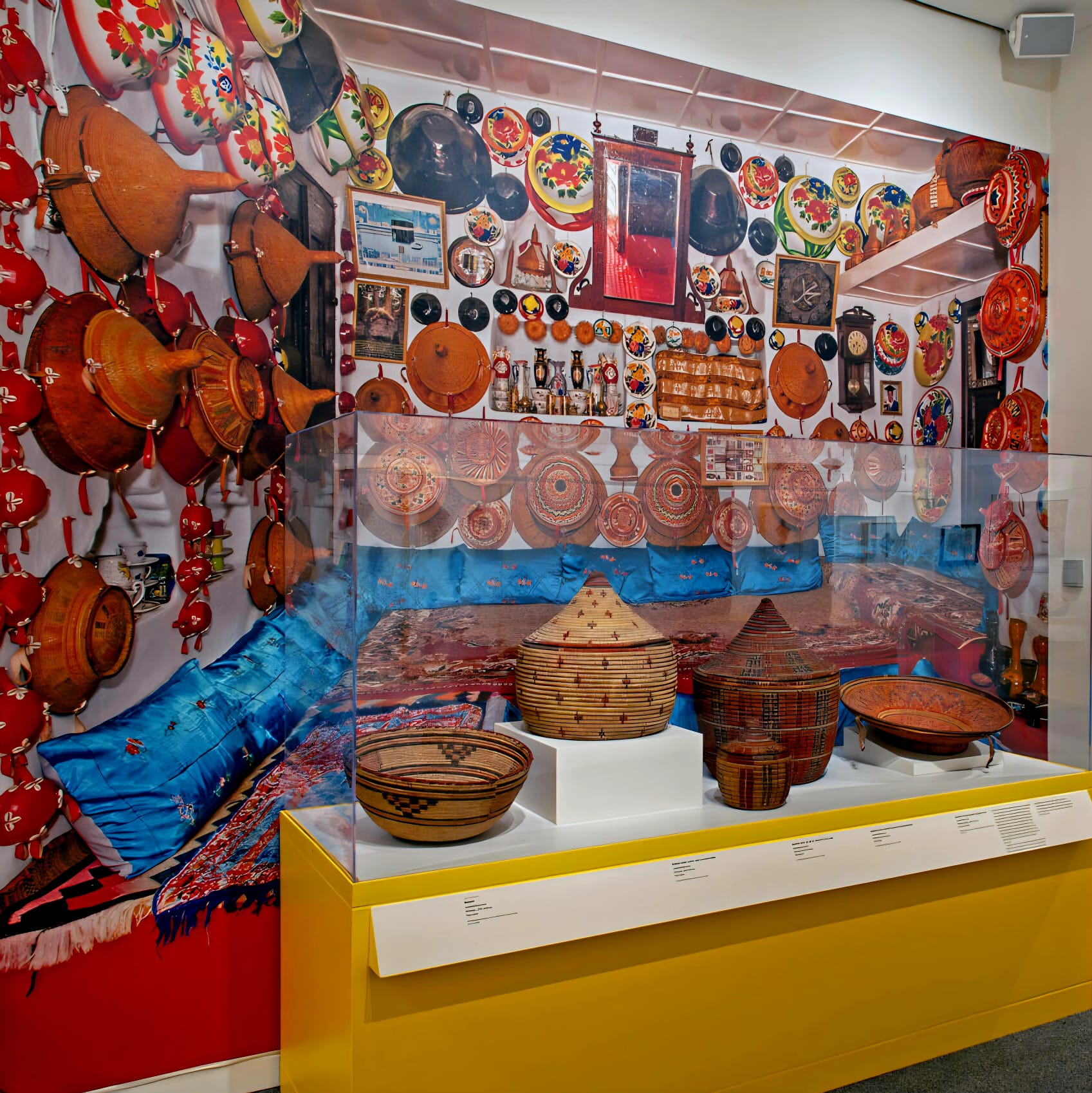
Image courtesy of the Peabody Essex Museum.(https://www.pem.org/exhibitions/ethiopia-at-the-crossroads)
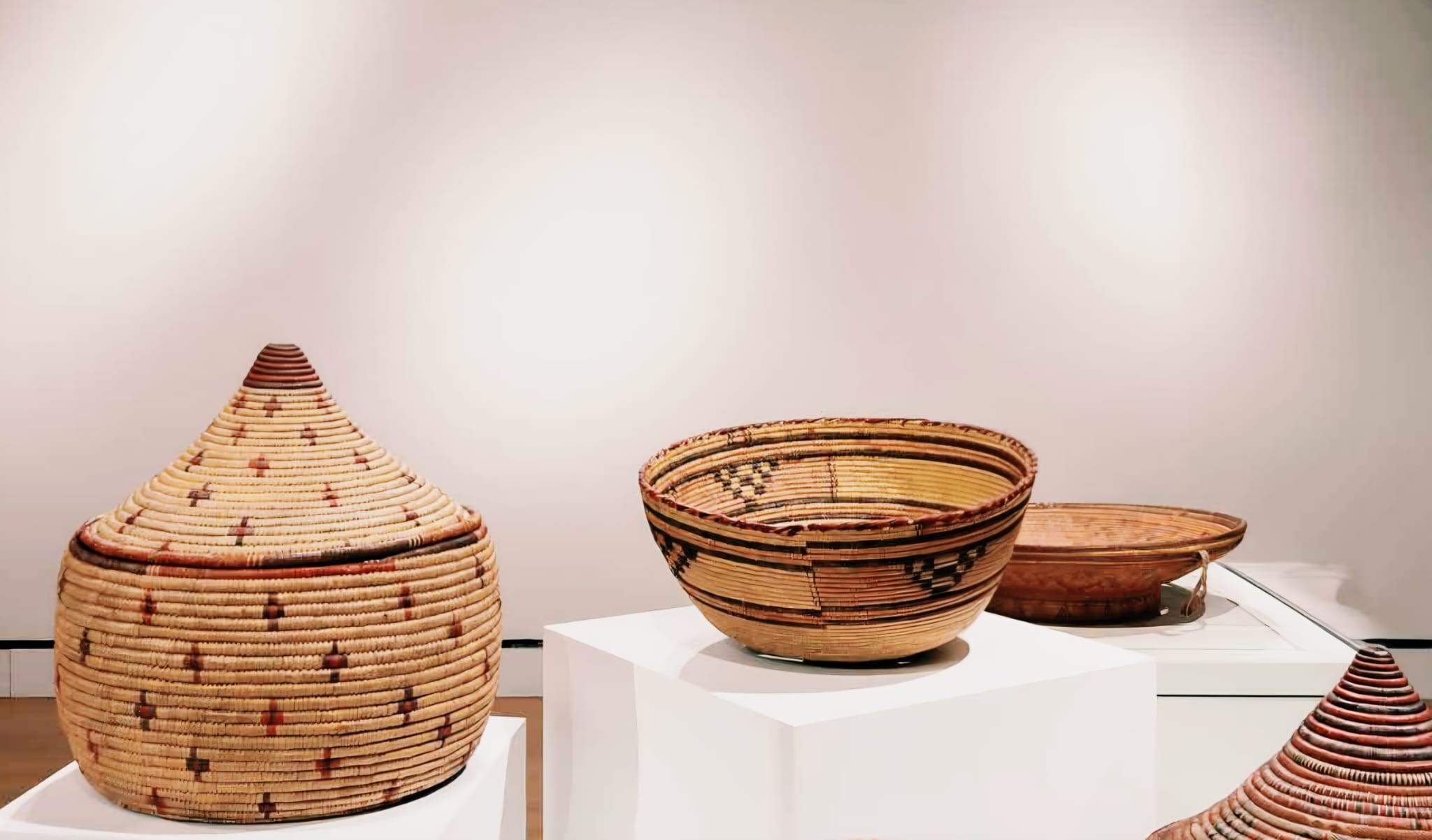
Image courtesy of the Walters Art Museum.https://thewalters.org/exhibitions/ethiopia-crossroads/
The exhibition is a reminder that objects created for everyday life can also become important cultural and artistic records.
A basket can begin as something practical and, over time, become something that tells us about craftsmanship, community, identity and history.
The British Picnic Hamper: Taking the Meal Outdoors
The British picnic hamper developed along a very different path.
Fortnum & Mason traces its first hampers to the late 1730s, when baskets were prepared for wealthy travellers journeying to country estates or destinations such as Bath. They were packed with provisions including bread, cheese, pies, fruit and other delicacies.
As enjoying the English countryside became increasingly popular, the hamper became closely associated with the emerging culture of picnicking and outdoor leisure.
The basket was no longer simply a container for provisions.
It became part of the experience.
Fortnum & Mason Picnic Basket
Food could be prepared at home, carefully packed into a hamper and carried into the countryside, where it could be unpacked and enjoyed with family, friends or companions.
The hamper effectively became a portable dining room.
Over time, it became associated with the rituals of travel, leisure, entertaining and outdoor dining.
From Carrying Food to Creating an Occasion
This is where the comparison between the Ethiopian basket and the British picnic hamper becomes particularly interesting.Neither is simply about carrying something.The Ethiopian basket belongs to traditions in which beautifully crafted vessels can help bring food, people and hospitality together.
The picnic hamper takes a different approach. It allows food, drink and the essentials of a meal to travel with us, turning a journey into an opportunity to gather and dine somewhere beyond the home.
One brings the meal to the gathering ,the other brings the gathering to the meal.In both cases, the basket becomes part of the experience.It does not simply hold the food.It helps create the occasion around the food.
Two Different Approaches to Craft
There is also an interesting contrast in how the two traditions approach materials and construction.
Traditional Ethiopian basketry is primarily associated with woven plant fibres, with colour, pattern and structure integrated directly into the weaving.The OOA Agilgul adds another dimension through its leather outer covering, giving the woven form a distinctive tactile and visual character.British picnic hampers traditionally use wicker, particularly willow, creating a different visual and structural language.Modern luxury hampers can also incorporate leather, fabric, china, glassware and specially fitted compartments.The differences reflect their respective histories and uses.The Ethiopian basket reflects a tradition of handcraft, cultural identity, food and hospitality.The picnic hamper reflects a tradition of mobility, leisure, outdoor dining and entertaining.Yet both demonstrate the same fundamental principle:Craftsmanship can turn a practical object into part of an experience.
Hospitality Takes Different Forms
Hospitality does not look the same everywhere;
In Ethiopian dining, hospitality is expressed through sharing. Food is placed at the centre and people gather around it, with the experience of eating becoming inherently social.
The British picnic represents another expression of hospitality.A hamper allows someone to prepare food in advance, carry it into the countryside and create a meal somewhere unexpected.
The setting changes, but the underlying pleasure remains familiar:prepare something, bring people together and share it.That may explain why both traditions continue to have such visual and emotional appeal.They demonstrate that food is rarely only about what we eat.It is also about where we gather, what we bring, who we share it with and the memories created around it.
Why These Baskets Still Matter
Today, both traditions have moved beyond their original practical purposes.
Ethiopian baskets can be found in homes, cultural collections and contemporary interiors, where their distinctive forms are appreciated as expressions of Ethiopian craftsmanship.
The picnic hamper has similarly evolved.Contemporary luxury hampers can contain everything from fine china and cutlery to glassware and specially prepared food.
In both cases, craftsmanship has transformed a practical container into something people value aesthetically.
The basket becomes part of the occasion.And that is perhaps why these objects continue to resonate today.They connect the practical with the beautiful, and the individual object with the experience that happens around it.
Two Traditions. One Timeless Idea.
It would be tempting to look at these two baskets and assume that one tradition must have influenced the other yet in contary ,their histories developed in different cultural contexts.What makes the comparison interesting is precisely that different societies arrived at their own ways of combining craft, food and gathering.
The Ethiopian basket helps bring food and people together around a shared experience.The British picnic hamper makes it possible to carry that experience somewhere beautiful.One celebrates the shared table.
The other celebrates the journey to the table.And perhaps that is the enduring beauty of these baskets.
They were made to hold food, but over generations they have come to hold something much more valuable:
tradition, craftsmanship, hospitality and the moments we share with one another.